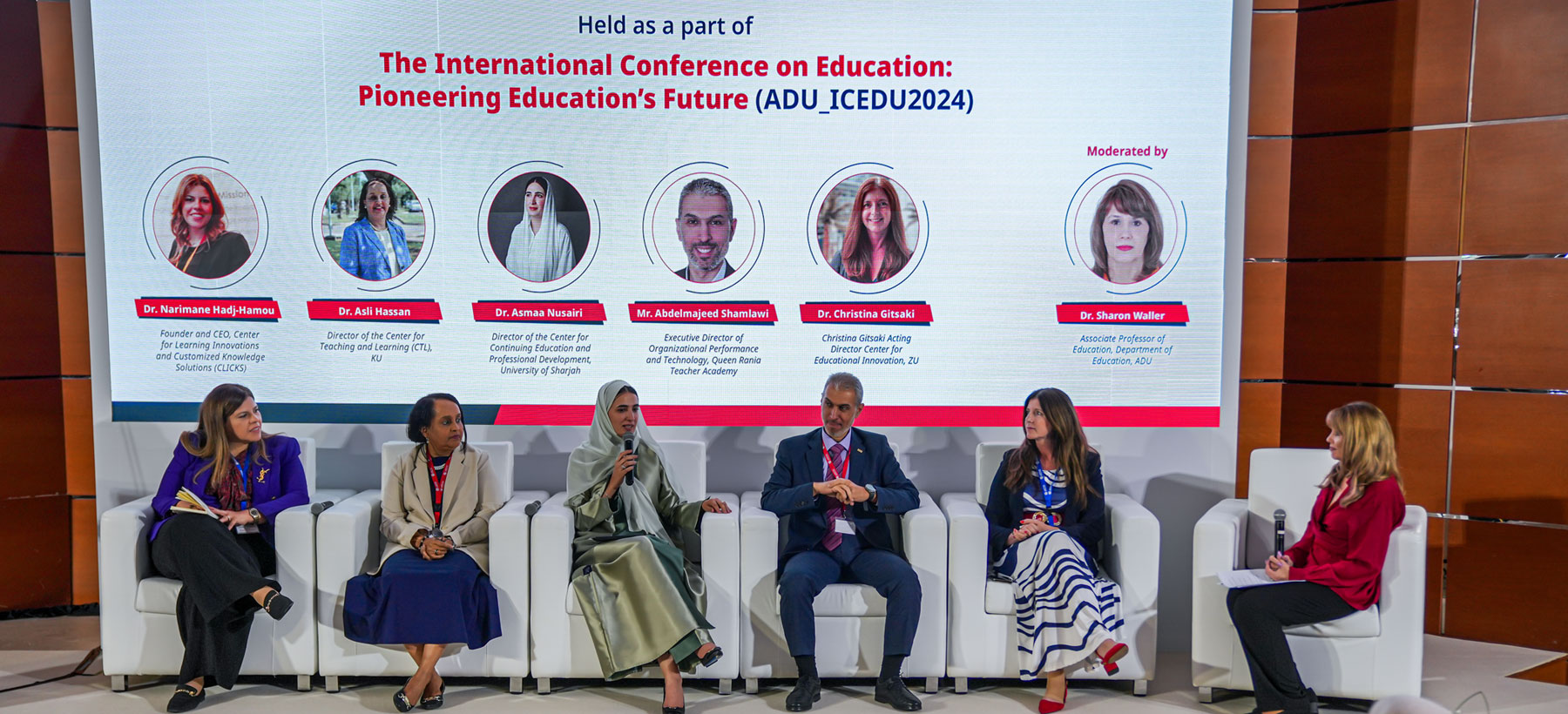
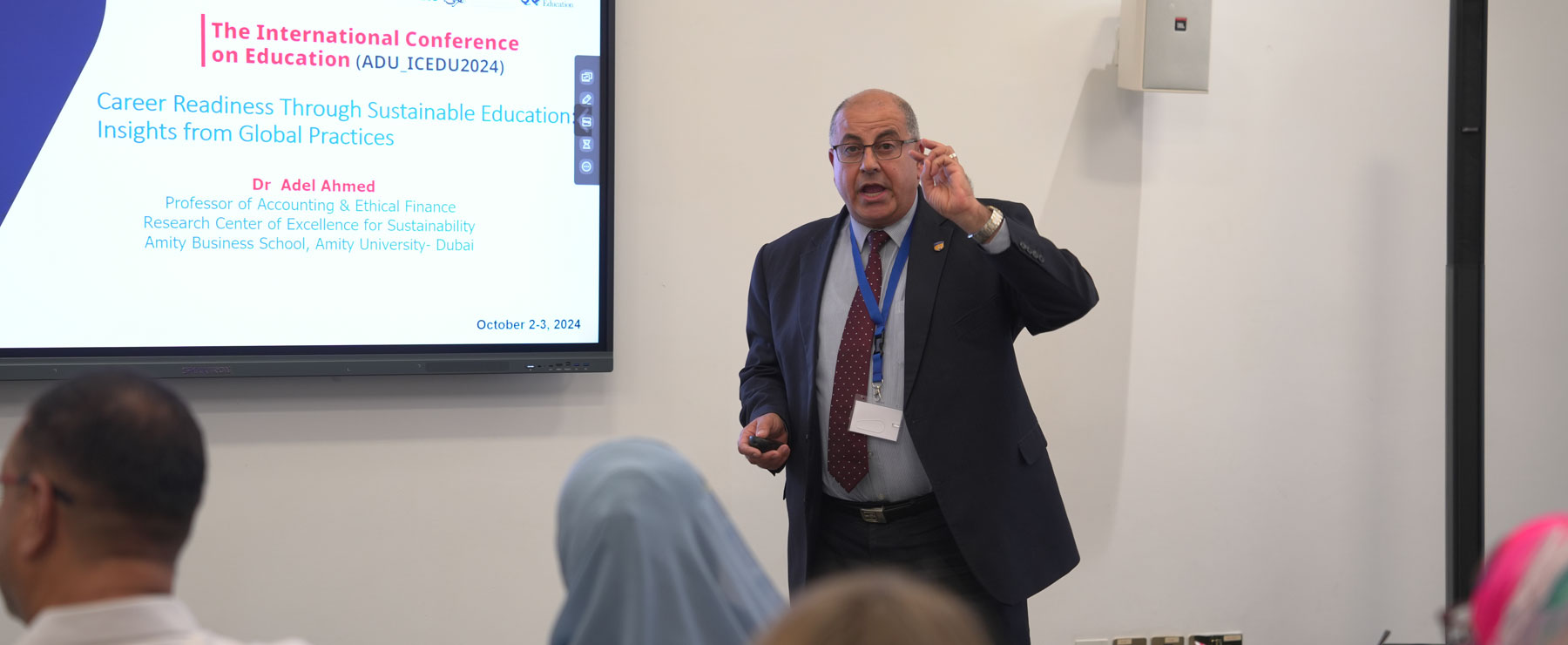
DAY 1 - Wednesday, 7 October 2026 |
9:00-10:00 AM | Registration and Morning Coffee |
Inaugural Session |
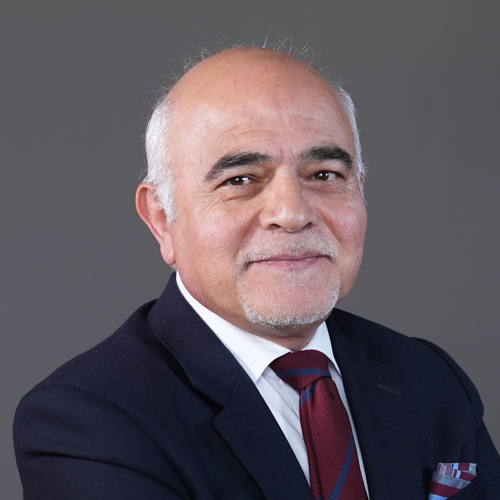
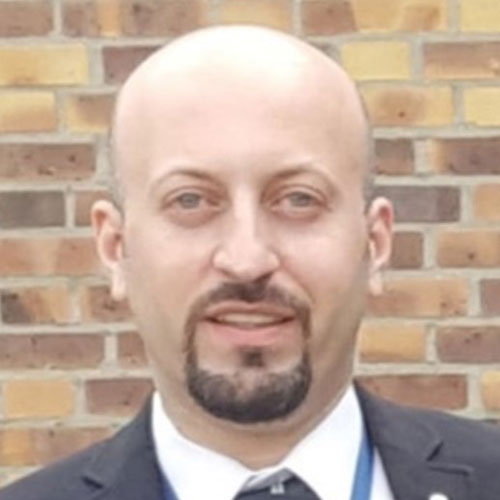
10:00-10:10 AM | Opening Speech | H.E. Zaki Nusseibeh
The Cultural Advisor to the President of the UAE,
Chancellor of UAE University
|
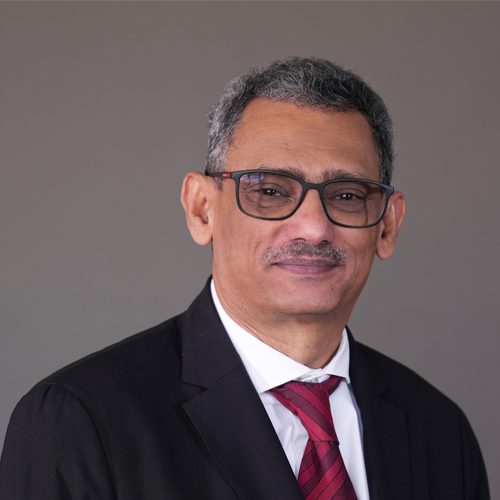
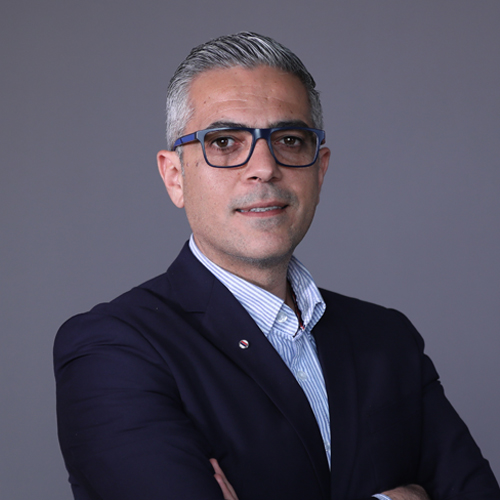
10:10-10:15 AM | Welcome Note – ADU Speech | Prof. Ghassan Aouad,
Chancellor, Conference Advisor,
Abu Dhabi University
|
10:15-10:20 AM | Highlights of the Conference | Prof. Barry O'Mahony
Provost, Abu Dhabi University
|
10:20-10:40 AM | Official Speakers | H.E. Mahra Al-Mutaiwie
Director of the Regional Center for Educational Planning (RCEP-UNESCO)
|
Dr. Mohammed Al-Ali
Chairman of TRENDS Group
|
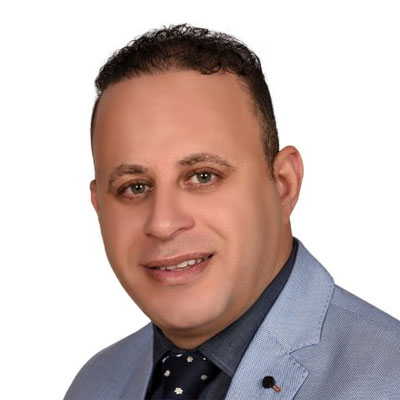
Mr. Abdelmajeed Shamlawi
Chief Executive Officer, Queen Rania Teacher Academy
|
10:40-11:00 AM | Coffee Break |
11:00-11:20 AM | Keynote Speaker
Reimagining Academic Identity for a Future Ready Academy
Click here
| Professor Fiona Smart, PhD, PFHEA
Learning and Teaching Enhancement Consultant
Director: Fiona Smart Coaching and Consultancy Ltd
|
11:20-11:40 AM | Keynote Speaker
Learning with and for a world of AI
Click here
| Prof. Andreas Schleicher
Director for Education and Skills at the Organization for Economic Co-operation and Development (OECD)
|
11:40-12:00 PM | Keynote Speaker
Beyond the Early Adopters: Teaching in the Uneven Age of AI
Click here
| Professor of Practice Nancy Gleason
Director Academic Excellence
Humanities, Social & Management Sciences Division, Mohamed bin Zayed University of Artificial Intelligence
|
12:00-01:00 PM | Presidential Dialogue:
Reimagining Universities for Future Learners in the Age of AI
Click here
| Moderator:
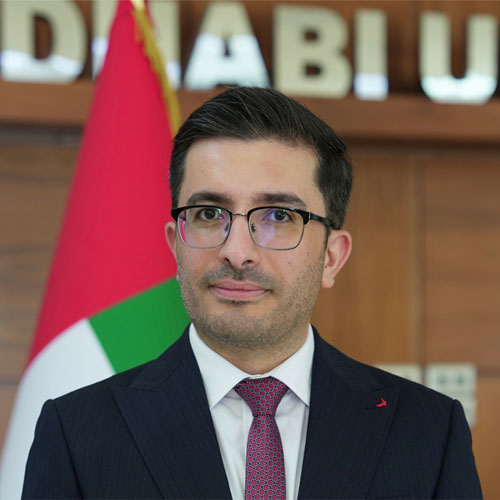
Dr. Hamad Odhabi,
Vice Chancellor for AI and Operational Excellence, Abu Dhabi University
|
Panelists:
Prof. Ghassan Aouad
Chancellor, Conference Advisor, Abu Dhabi University
|
HE James Anthony Morse
President, Rabdan Academy
|
Prof. Ahmed Ali Al Raeesi
Vice Chancellor, United Arab Emirates University
|
Prof. Mohammed Awad
Associate Vice President for Research and Innovation and Professor of Computer Science at the American University of Ras Al Khaimah (AURAK)
|
Prof. Erich Dietrich
Vice Provost for Undergraduate Education, New York University Abu Dhabi
|
1:00-2:00 PM | Break and Lunch |
2:00-3:00 PM | Panel Discussion:
Inclusive and Future-Ready Education: From Access to Meaningful Engagement
Click here
| Moderator:
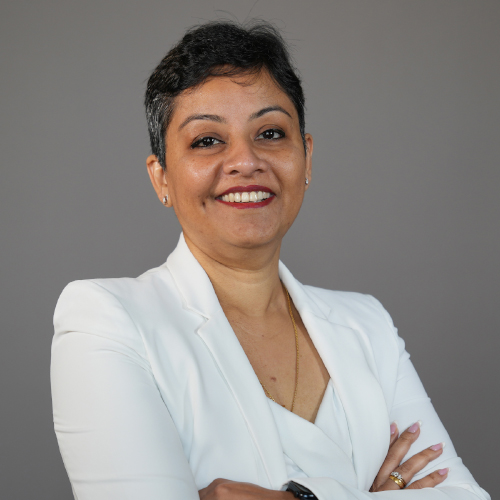
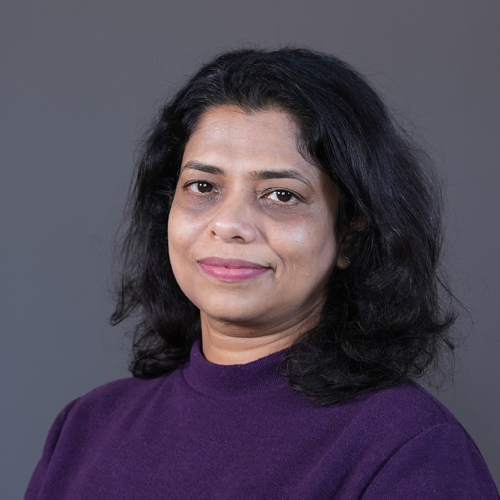
Dr. Sreethi Nair
Dean, College of Arts, Education & Social Science, Abu Dhabi University
|
Panelists:
Prof. Eman Gaad
Dean of the Faculty of Education and Professor of Special and Inclusive Education at the British University in Dubai
|
Ms. Nadera Alborno Ed.D.
Dean of the Graduate School of Education and Professor of Education, American University in Dubai
|
Ms. Nicki Williams
Director of Education, Taaleem
|
Ms. Margaret Ann Haynes
Director of Schools, Liwa Education
|
Ms. Alanoud AlZaben
Education Specialist at the Queen Rania Teacher Academy
|
Parallel Sessions
Time: 3:00-6:00 PM |
3:00-5:00 PM | Parallel Sessions |
Track | Curriculum & Pedagogy Design |
Chair | Dr. Smitha Dev, Assistant Professor of Psychology, Abu Dhabi University |
Venue | Conference Room 1 |
Paper ID | Author/s | Paper Title |
|---|
ADUICEDU2026-ID#218 | Nevine Abraham (Carnegie Mellon University) | Building Intercultural Empathy through Virtual Exchange between U.S. Undergraduates and Arab Peers
| ADUICEDU2026-ID#166 | Adel Sakakini (Beirut Arab University); Buna Baasiri (Beirut Arab University) | Learning Styles and Characteristics of Successful Language Learners and Effective Teaching Strategies in the Lebanese Context (IELTS Participants/ A Case Study)
| ADUICEDU2026-ID#129 | Akmal Nazir (United Arab Emirates University) | Rethinking curriculum design in the era of generative AI: Developing course-level policies for responsible integration
| ADUICEDU2026-ID#102_A | Dr. Jiss Varghese Mathew (Birla Institute of Technology & Science, Pilani, Dubai Campus). | Identification of Core Competencies for the bachelor degree in Façade Engineering
| ADUICEDU2026-ID#155 | Eunsang Eom (Korea University); Jong-kook Kim (Korea University); Seoyoon Lee (Team Monolith); Yeongbin Bae (Team Monolith)
| Problem Before Syntax: The Context–Capability–Inquiry Model for K-12 Data and AI Education
| ADUICEDU2026-ID#55 | Hamzeh Dodeen (United Arab Emirates University) | الأسئلة الشفوية الصفية ودورها الفعّال في التعّلم النشط: دراسة أثر متغيرات التحصيل ونوع الطالب والمستوى الدراسي والتساهل في الدرجات وحجم الصف في تقييم فعالية استخدامها
| ADUICEDU2026-ID#54 | Hayssam Hammad (Abu Dhabi University); Wail Abu Obaid (Abu Dhabi University) | Designing UAE Civil Procedure Law Curricula in Light of the Transition to Smart Litigation: A Competency-Based Framework for Future Legal Learners
| ADUICEDU2026-ID#198 | Hiea Mizyed (Emirates College for Advanced Education)
| Parental Neuroeducation in Early Childhood: A Conceptual Framework
| ADUICEDU2026-ID#175 | Inaya Khan (Canadian University Dubai); Tahamid Hossain (Canadian University Dubai); Arash Kermani Kolankeh (Canadian University Dubai) | Designing AI-Supported Mathematics Pedagogy for Future Learners: The Khayyam Math Case Study
| ADUICEDU2026-ID#123 | Jacob Thomas-Llewellyn (Rabdan Academy) | Resilience Through Research and Reading: Historical Case Study Analysis in UAE Officer Education.
| ADUICEDU2026-ID#111 | Mohammed Elrakhawy (University of Sharjah )
| From Play to Potential: A Developmental Physical Education Curriculum Framework Integrating Long-Term Athlete Development and the Youth Physical Development Model
| ADUICEDU2026-ID#13 | AAFREEN KHAN (MARVELOUS AILEGEND) | Morphological Transformations: Interactive Tumor Segmentation for Computer Vision Pedagogy
| ADUICEDU2026-ID#222 | Asmaa Abu Obaid (Abu Dhabi University); Tahani Bsharat (An-Najah National University, Faculty of Graduate Studies); Khaoula Errafii (Abu Dhabi University); Ismail Sheikh Ahmad (Department of Language and Literacy, Faculty of Education, International Islamic University Malaysia (IIUM))
| The Dual-Edged Algorithm: A Systematic Review of TikTok's Effects on Student Motivation, Linguistic Competence, and Academic Performance
| ADUICEDU2026-ID#90 | Ahmad Al Aiyan (United Arab Emirates University) | Designing Future-Ready Learning: An Evidence-Based Pedagogical Framework for Digital, Immersive, and AI-Supported Education
|
|
Track | Digital Pedagogies & Learning Analytics |
Chair | Dr. Areej Ahmed, Assistant Professor of Education, Abu Dhabi University |
Venue | Conference Room 2 |
Paper ID | Author/s | Paper Title |
|---|
ADUICEDU2026-ID#13 | AAFREEN KHAN (MARVELOUS AILEGEND) | Morphological Transformations: Interactive Tumor Segmentation for Computer Vision Pedagogy
| ADUICEDU2026-ID#90 | Ahmad Al Aiyan (United Arab Emirates University) | Designing Future-Ready Learning: An Evidence-Based Pedagogical Framework for Digital, Immersive, and AI-Supported Education
| ADUICEDU2026-ID#222 | Asmaa Abu Obaid (Abu Dhabi University); Tahani Bsharat (An-Najah National University, Faculty of Graduate Studies); Khaoula Errafii (Abu Dhabi University); Ismail Sheikh Ahmad (Department of Language and Literacy, Faculty of Education, International Islamic University Malaysia (IIUM)) | The Dual-Edged Algorithm: A Systematic Review of TikTok's Effects on Student Motivation, Linguistic Competence, and Academic Performance
| ADUICEDU2026-ID#191 | Bendoukha Fatima (Graduate School of Economics Oran) | The Role of Artificial Intelligence in Language Learning: A Hybrid Approach to AI-Supported Instruction
| ADUICEDU2026-ID#212 | Bhagya Madushani (Heriot watt university Dubai); Bhagya Perera (Heriot watt university Dubai); Smitha Kumar (Heriot watt university Dubai) | BioBot: An AI-Powered, Retrieval-Augmented Question-Answering System for Evidence-Grounded Biomedical Learning
| ADUICEDU2026-ID#102 | Earl Jerald Cansino (College of Medicine, University of the Philippines Manila); Mikael Carlos Mendoza (College of Medicine, University of the Philippines Manila); Louiejabe Nuniala (College of Medicine, University of the Philippines Manila); Leiko Sayo (School of Medicine and Public Health, Ateneo de Manila University); Iris Thiele Isip-Tan (Medical Informatics Unit, College of Medicine, University of the Philippines Manila)
| Negotiating AI Reliance and Emerging Co-Dependence in Medical Education: A Qualitative Study of Medical Students' Experiences with Generative Artificial Intelligence
| ADUICEDU2026-ID#61 | Elie Matta (American University of Beirut) | Whose English Does the Model Speak? A Three-Layer Framework for Linguistic Justice in GenAI-Mediated TESOL
| ADUICEDU2026-ID#214 | Ghassan Safi (American University of Science and Technology); Halim Choueiry (American University of Science and Technology) | Command Before Generation: Toward a Pedagogy of Learner AI Agency
| ADUICEDU2026-ID#89 | Hind Almarzooqi (Hamdan Bin Mohammed Smart University); Serafettin Gedik (Hamdan Bin Mohammed Smart University)
| A Case Study of a Self-Paced Online Learning (SPOL) Course: Learner Experiences with a Chatbot Application
| ADUICEDU2026-ID#193 | Houda Ahmed Ali Al-Mashni (Ministry of Education ) | Teachers' Perceptions of the Effectiveness of the Noor Educational Platform in Omani Schools
| ADUICEDU2026-ID#190 | Ibrahim Shaban (United Arab Emirates University); Alyazia Alkaabi (United Arab Emirates University); Alyazia Ahamad Alameri (United Arab Emirates University); Asma Alkhoori (United Arab Emirates University); Noura Alfalasi (United Arab Emirates University); Ghazi Albreiki (United Arab Emirates University) | Implementation of Education 4.0 Between Readiness and Willingness: A Pilot Study on UAE Institutions
| ADUICEDU2026-ID#52 | Kayode Adenuga (University of Law Business School)
| Artificial Intelligence and Contemporary Pedagogies: A PRISMA-Informed Narrative Review with Quality Assessment
| ADUICEDU2026-ID#187 | BRIDGE AI: Breaking Academic/Research Overfitting Through Inter-Institutional Collaboration and Shared AI Ecosystems | BRIDGE AI: Breaking Academic/Research Overfitting Through Inter-Institutional Collaboration and Shared AI Ecosystems
|
|
Track | Leadership, Policy & Quality Assurance |
Chair | Dr. Mohammad Al Rashaida, Associate Professor, United Arab Emirates University |
Venue | Meeting Room 1 |
Paper ID | Author/s | Paper Title |
|---|
ADUICEDU2026-ID#122 | Anoud Salah Eldeen (RAKEZ); Mardy Dizon (Cambridge for Family Counseling and Training Center ); Mahra Al Malek (Cambridge for Family Counseling and Training Center ) | The Impact of Leadership Styles on Staff Relationships and Productivity: A Mixed-Methods Study at Kidzone Nursery
| ADUICEDU2026-ID#14 | Ayman Massouti (Sharjah Education Academy); Asma Abdallah (Sharjah Education Academy) | The integration of artificial intelligence in private schools’ curricula: Perceptions, practices, and policy implications in Ras Al Khaimah
| ADUICEDU2026-ID#107 | Diana Hudaib (Abu Dhabi University); Sana'a Alreiahy (Abu Dhabi University) | Ethical Leadership as a Buffer Against Performativity: Evidence from ADEK-Regulated Private Schools in Abu Dhabi
| ADUICEDU2026-ID#143 | Eman Elhosiny (Ministry of Education) | From School Reform to Corporate Readiness: A Comparative Analysis of AI-Driven M&E in Multi-Generational Enterprise Education
| ADUICEDU2026-ID#74 | Reem Hashem (Emirates College For Advanced Education) | Triangulated Mentorship Ecology: An AI-Mediated Community of Practice for Arabic Language Teachers Through a Higher Education-School Partnership
| ADUICEDU2026-ID#85 | Eman ElKaleh (Emirates College for Advanced Education); Nagla Ali (Emirates College for Advanced Education) | From Policy Borrowing to Policy Learning: Toward Culturally Responsive Educational Systems
| ADUICEDU2026-ID#209 | Fatma Alhammadi (Emirates College for Advanced Education)
| School Leadership Practices Supporting Science-Laboratory Use in Dubai’s Cycle 1 Government Schools
| ADUICEDU2026-ID#95 | Jafar Paramboor (International islamic University Malaysia) | Between Bureaucratic Compliance and Localized Action: A Phenomenological Inquiry into Malaysian School Crisis Leadership
| ADUICEDU2026-ID#177 | Murhaf Wahb (Al Sanawbar School) | Beyond Compliance: The Continuous Improvement Commitment Roadmap (CICR) as an Integrative Framework for Developing Organizational Capability in Schools
| ADUICEDU2026-ID#140 | Najeeba Alzubaidi (Emirates College for Advanced Education); Sarah Mead Jasperse (Emirates College for Advanced Education)
| School Inspection and Accountability in Driving School Improvement: A Systematic Review and Thematic Synthesis
| ADUICEDU2026-ID#36 | Nashwa Elabied (Ludwigsburg University) | Doctoral Papers ( AI as a Collaborative Partner in Higher Education Management)
| ADUICEDU2026-ID#125 | Nicole Shammas (Higher Colleges of Technology); Louise Robertson (Higher Colleges of Technology) | What Makes Higher Education Transformative? Looking Back to Design the Future
| ADUICEDU2026-ID#21 | Noha Zoelfakar (United Arab Emirates University)
| Between Vision and Reality: Policy Implementation, Quality Assurance, and Educational Reform in the UAE's Higher Education Landscape
| ADUICEDU2026-ID#227 | Saeed Althabahi (Abu Dhabi University)
| Guardrailed Intelligence in a Redesigned School System: Reducing Between-Teacher Variance in AI-Augmented Learning
|
|
Track | Teacher Professional Learning & Faculty Development |
Chair | Dr. Mary Varghese, Assistant Professor of Education, Abu Dhabi University |
Venue | Meeting Room 2 |
Paper ID | Author/s | Paper Title |
|---|
ADUICEDU2026-ID#114 | Alhola Al Rawahi (Muscat College); Muna Al Kalbani (Muscat College); Siham Al Hinai (Muscat College); Maha Al Wahabi (Muscat College)
| Faculty Perceptions of Integrating Artificial Intelligence in Higher Education in the Sultanate of Oman
| ADUICEDU2026-ID#77 | Hussam Eldein Zaineh (International Islamia School Otsuka)
| Examining Culturally Responsive and Inclusive Education in a Japanese Islamic School: A Case Study of the International Islamia School Otsuka (IISO)
| ADUICEDU2026-ID#47 | Asma Abdallah (Sharjah Education Academy ); Ahmed Alkaabi (United Arab Emirates University); Enas Alqodsi (United Arab Emirates University) | Leading Teacher Learning through Digitally Mediated Supervision: Trust, Documentation, and Internal Accountability in UAE Schools
| ADUICEDU2026-ID#82 | Clare Rawlings (Raw Movement) | From Classroom to Career: Teacher Physical Wellbeing, Movement-Centred Learning, and tackling the Global Burden of Musculoskeletal Ill Health.
| ADUICEDU2026-ID#134 | Fakhrah Alblooshi (university of Sharjah) | Communities of Practice in the Age of AI: Overcoming Future Challenges in Higher Education
| ADUICEDU2026-ID#51 | Fatma Al Shibli (Muscat College)
| Teacher Workload and Burnout in AI Adoption: Instructor Wellbeing and Ethical Boundaries for Sustainable Practice
| ADUICEDU2026-ID#15 | Isaac Tabor (Knowledge E) | Applying a Framework for Institutional AI Literacy Development
| ADUICEDU2026-ID#69 | Kefah Al-Haddad (National Academy for Childhood Development) | A Sustainable Competency-Based Reflective Practice Model for Enhancing Professional Competencies among Early Childhood Educators in Abu Dhabi
| ADUICEDU2026-ID#88 | Mariam Aljabaly (University of Helsinki); Kaiju Kangas (University of Helsinki); Pirita Seitamaa-Hakkarainen (University of Helsinki); Tiina Korhonen (University of Helsinki)
| Nurturing the maker Mindset in Formal Education - Teachers' Conceptualization and Facilitation
| ADUICEDU2026-ID#48 | Asma Abdallah (Sharjah Education Academy ); Enas AlQoodsi (United Arab Emirates University); Ahmed Akaabi (United Arab Emirates University) | Digital Inclusion and Digital Government Use Among Older Adults in the UAE
| ADUICEDU2026-ID#142 | Debolina Halder (Global Business Studies (GBS)); Nasiruddeen Muhammad (Abu Dhabi University) | Artificial Intelligence-Supported Lifelong Learning for SDG 4: Perspectives of UAE Trainee Teachers Through the Lens of the Right to Education
| ADUICEDU2026-ID#196 | Dr. Hussein Khalifa (United Arab Emirates University)
| Preparing Digital Natives for Algorithmic Futures: A Comparative Study of Gen Z and AI Media Education in China and Egypt
| ADUICEDU2026-ID#203 | Katrina Kinsella (Higher Colleges of Technology); Sonia Batra (Higher Colleges of Technology); Jonathan Gelens (Higher Colleges of Technology); Nazila Motahari (Higher Colleges of Technology); Alison Prince (Higher Colleges of Technology); Louise Robertson (Higher Colleges of Technology); Pushpa Sadhwani (Higher Colleges of Technology); Kevin Lim (Higher Colleges of Technology); Nicholas Bates (Higher Colleges of Technology)
| Developing Confidence Literacy: Practical Strategies for Embedding Communication Teaching
|
|
Track | Assessment for Learning & Academic Integrity; Experiential & Work-Integrated Learning; Student Success & Wellbeing |
Chair | Dr. Nermin Eissa, Associate Professor of Biomedical Sciences, Abu Dhabi University |
Venue | Meeting Room 3 |
Paper ID | Author/s | Paper Title |
|---|
ADUICEDU2026-ID#118 | Abdullah Aftab (Abu Dhabi University); Haady AbdulJabar (Abu Dhabi University); Sulaiman Ahmed (Abu Dhabi University); Alramzana Navaz (Abu Dhabi University); Faiza Hashim (Abu Dhabi University)
| Securing University Attendance & Academic Integrity Using Facial Recognition
| ADUICEDU2026-ID#156 | Aya Shanti (Khalifa University); Amin Ali (Khalifa University); Lujain Aloum (BrainWire for Mind Capabilities Development Center); Gihan Elbait (Khalifa University)
| Understanding Students' AI Use to Provide Personalized Feedback and Strengthen AI Literacy
| ADUICEDU2026-ID#79 | Dr. Neil Satoquia (Higher Colleges of Technology) | Utilization of Peer Oral Feedback in Students’ Revised Composition
| ADUICEDU2025-ID#121 | Christopher Preece (Tunku Abdul Rahman University of Management and Technology )
Teck Wei Ng (Tunku Abdul Rahman University of Management and Technology)- Online
| Reimagining Construction Management Education in Malaysia: A Framework for AI-Enhanced Teaching and Learning
| ADUICEDU2026-ID#81 | Ian van der Waag (Rabdan Academy); Warren Chin (Rabdan Academy) | Banning to Blending: Embracing Generative-AI in Authentic Assessment and Oral Defence
| ADUICEDU2026-ID#164 | Nevine Abraham (Carnegie Mellon University); Ezzohra Moufid (Carnegie Mellon University Qatar)
| Cultivating Global Citizenship: Pedagogical Strategies for Transnational Virtual Exchange
| ADUICEDU2026-ID#12 | Reema Qaralleh (National Academy for Childhood Development ); Ashraf ALkaraki (Higher Colleges of Technology) | Micro-Credentials and Feedback Systems to Support Professional Identity Development in Work-Integrated Learning
| ADUICEDU2026-ID#202 | Fatima Al-Khalifi (Abu Dhabi University); Salma Mohamedtahir (Abu Dhabi University); Mahmoud Ibnouf (Abu Dhabi University); Ioannis Zuburtikudis (Abu Dhabi University) | Evaluating Hands-On Chemical Engineering Outreach: A Comparative Study of Design Competition and Scientific Innovation Workshop
| ADUICEDU2026-ID#180 | Fatma Mourgan (Sohar University); Ali Al Shamli (Sohar University); Amal Al Saadi (Sohar University); Aisah Al Saidi (Ministry of Education); Jumana Al Hinai (Ministry of Education); Ahmed El-Mahalawy (Sohar University)
| Building a Human-Powered Living Laboratory: A Novel Experiential Learning Model for Integrating Health, Renewable Energy, and Sustainability Education in Higher Education
| ADUICEDU2026-ID#145 | Francesco Cangiano (Rabdan Academy); Francis Gaudreault (Rabdan Academy) | Teaching Decision-Making Under Uncertainty: AI-Driven Scenario Simulation in Military Leadership Education
| ADUICEDU2026-ID#194 | Asma Al Yahyaei (Sultan Qaboos University) | Beyond the Classroom: Supporting Student Success and Wellbeing During the Transition to Clinical Learning
| ADUICEDU2026-ID#176 | Cindy Turk (Holy Spirit University of Kaslik); Cindy Turk (Holy Spirit University of Kaslik)
| Character strengths among Lebanese young adults: A cross-sectional study using the VIA Inventory of Strengths (VIA-72)
| ADUICEDU2026-ID#22 | Aysha Alshamsi (Emirates College for Advanced Education); Esraa Jarara (Emirates College for Advanced Education) | Fostering Critical Leadership in Aspiring School Leaders through AI-Assisted Reflective Blogging in Higher Education
| ADUICEDU2025-ID#56 | Aysha Alshamsi (Emirates College for Advanced Education); Esraa Jarara (Emirates College for Advanced Education)
| Inclusive Leadership as a Driver of Teacher Self-Efficacy and Attitudes Toward Inclusion in Abu Dhabi Schools
|
|
Time: 3:00-4:00 PM |
Track | Curriculum & Pedagogy Design; Sustainability Education & the SDGs |
Chair | Dr. Ashraf Moustafa; Assistant Professor, United Arab Emirates University |
Venue | Al Barza |
Paper ID | Author/s | Paper Title |
|---|
ADUICEDU2026-ID#173 | Mahra Alaryani (Zayed University ); Rawia Ahmed (Zayed university); Salma Bin safwan (Zayed university) | Conceptualizing and Practicing Peace: A Student Perspective in Higher Education in the UAE
| ADUICEDU2026-ID#189 | Mohammed Umar (United Arab Emirates University)
| When Does Technology Become Accounting? Exploring Academic Resistance to Integrating Accounting Software into the Accounting Curriculum
| ADUICEDU2026-ID#13 | AAFREEN KHAN (MARVELOUS AILEGEND) | Morphological Transformations: Interactive Tumor Segmentation for Computer Vision Pedagogy
| ADUICEDU2026-ID#137 | Amira Morgan (Teacher) | Beyond Case Completion: Designing Case-Based Learning to Support Scientific Reasoning in Science Education
|
|
Time: 3:00-6:00 PM |
Track | Curriculum & Pedagogy Design |
Chair | Ms. Deenaz Kanji, Senior Instructor of Social Science, Abu Dhabi University |
Venue | Online |
Paper ID | Author/s | Paper Title |
|---|
ADUICEDU2026-ID#191 | Bendoukha Fatima (Graduate School of Economics Oran)
| The Role of Artificial Intelligence in Language Learning: A Hybrid Approach to AI-Supported Instruction
| ADUICEDU2026-ID#77 | Hussam Eldein Zaineh (International Islamia School Otsuka)
| Examining Culturally Responsive and Inclusive Education in a Japanese Islamic School: A Case Study of the International Islamia School Otsuka (IISO)
| ADUICEDU2026-ID#164 | Nevine Abraham (Carnegie Mellon University); Ezzohra Moufid (Carnegie Mellon University Qatar)
| Cultivating Global Citizenship: Pedagogical Strategies for Transnational Virtual Exchange
| ADUICEDU2026-ID#71 | Sana Nassereddine (USEK) | Promoting Students' Eight Wellness Dimensions in Crisis-Affected Schools: A Mixed-Methods Investigation
| ADUICEDU2026-ID#211 | Yasir Burney (City University Qatar | Ulster University); Habiba Akram (City University Qatar | Ulster University); Maria Nazir (City University Qatar | Ulster University) | Developing Engineering Judgement in the Age of Generative AI: A Pedagogical Model for Authentic Engineering Assessment
| ADUICEDU2026-ID#230 | Seema Varshney (Gulf College) | Are We Ready for the Future Workplace? Exploring Omani Business Management and Computing Students' Perceptions of the Skills Needed for Career Success
| ADUICEDU2026-ID#231 | Neelufer Kulkarni (Gulf College) | Sustainability Literacy and SDG Awareness among Undergraduate Students in Oman: The Mediating Role of Sustainability Education
| ADUICEDU2026-ID#124 | Hena Ahmed Iraqui (International Islamic University Malaysia (IIUM))
| Sustainability as Epistemic Justice: Realigning the ESD Butterfly Model Through Islamic Axiology and Epistemology
|
|
Paper ID | Author/s | Paper Title |
|---|
ADUICEDU2025-ID#80 | Roman Uliasz (University of Rzeszów)
| Voicing the Law: AI-Driven Speech Simulations in Legal Education
| ADUICEDU2025-ID#90 | Thery Beord (Sorbonne University Abu Dhabi)- Online
| Transforming Foreign Language Teaching with Immersive VR Game Experiences
| ADUICEDU2025-ID#56 | Asma Abdallah (Sharjah Education Academy )
Dr. Ahmed Al Kaabi (UAEU)
| Principal Engagement in the Teacher Evaluation Process in Remote Schools: A Narrative Inquiry of Language Teachers
| ADUICEDU2025-ID#33 | Amjed Abushpap (Abu Dhabi University) | Student-centered curriculum aimed at enhancing communication skills
| ADUICEDU2025-ID#93 | Reem Hashem (Emirates College for Advanced Education) | Enhancing Learner Engagement, Reading Motivation, and Second-Language Comprehension through Educational Podcasts in Higher Education
|
|
Workshops
Time: 4:00-6:00 PM |
Time | Workshop | Venue | Presenter |
|---|
4:00-6:00 PM | Workshop: Designing AI-Enhanced Learning Experiences: From Concept to Classroom
Click here
| Main Hall | Dr. Hamad Odhabi
Vice Chancellor for AI and Operational Excellence, Abu Dhabi University
| 4:00-6:00 PM | Workshop: The Courageous Academy:
Embedding Psychological Safety as a Collective Practice
Click here
| Al Barza | Professor Fiona Smart, PhD, PFHEA
Learning and Teaching Enhancement Consultant
Director: Fiona Smart Coaching and Consultancy Ltd
| 4:00-6:00 PM | Workshop: The Courageous Academy:
Belonging by Design: Building Evidence of Inclusive Approaches for Fellowship
Click here
| Auditorium | Ms. Vic Stephenson, SFHEA
Senior Consultant (Education), Advance HE
Ms. Louise Lumsden
Head of Fellowships (Teaching), Advance HE
|
|
DAY 2 - Thursday, 8 October 2026 |
9:00-10:00 AM | Registration and Morning Coffee |
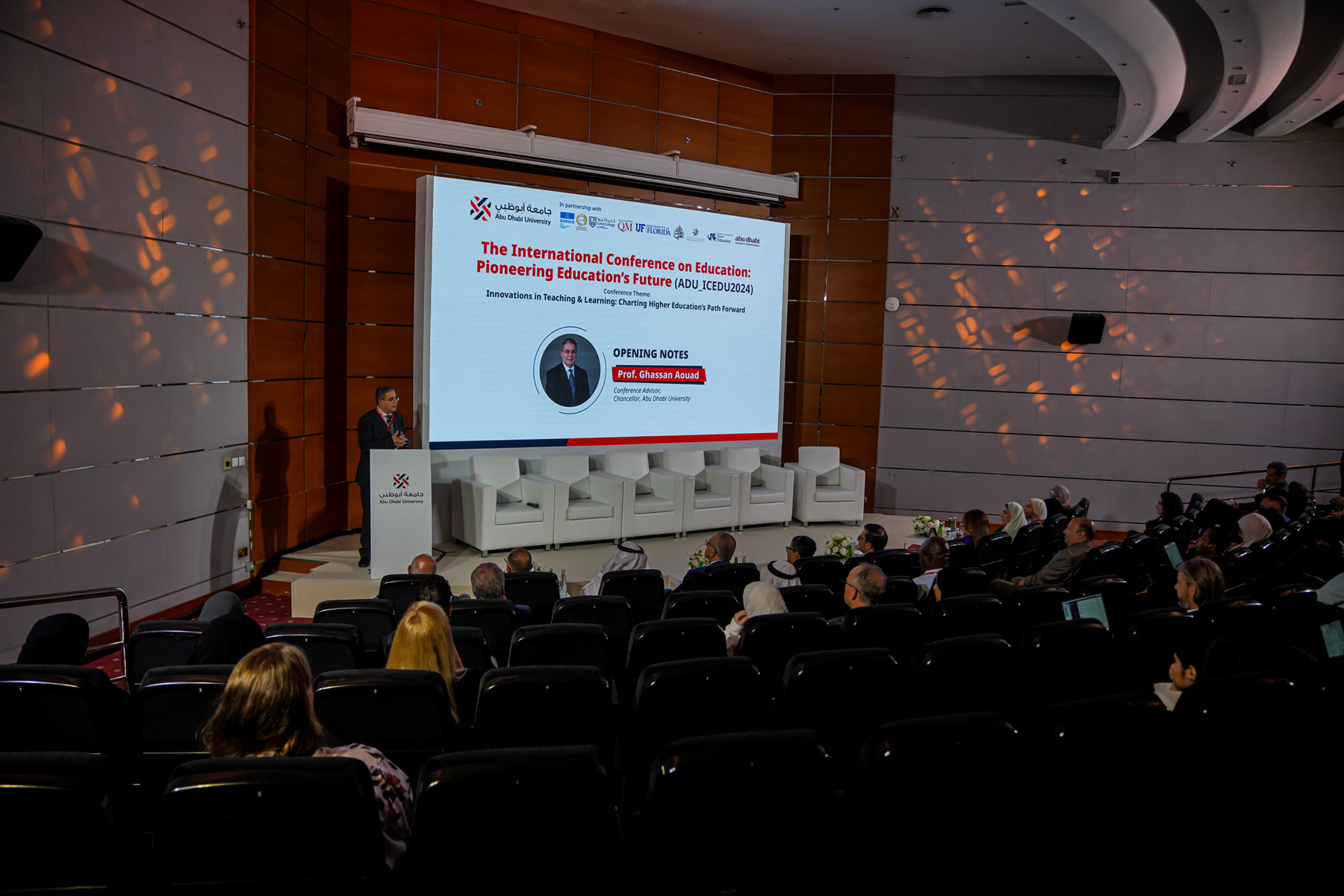
10:00-10:15 AM | Opening Notes | Prof. Ghassan Aouad,
Conference Advisor - Chancellor of Abu Dhabi University
|
10:15-10:45 AM |
Fireside Chat:
Preparing Gen Z for the Future of Work: Employability, Skills, and Mindset
| Prof. Ghassan Aouad,
Conference Advisor - Chancellor of Abu Dhabi University
Devi Sahny,
Educator & Entrepreneur, Global Education Advisory Board
|
10:45-11:15 AM |
Keynote Speaker
Using the Professional Standards Framework for teaching and supporting learning in higher education to support effective and inclusive practice
| Ms. Louise Lumsden SFHEA
Head of Fellowships (Teaching), Advance HE
|
11:15-11:30 AM | Coffee Break |
11:30-12:00 PM |
Keynote Speaker
Measuring What Matters: Impact, Evidence, and the Future-Focused Educator
| Dr. Christine Coombe
Associate Professor of General Studies, Higher Colleges of Technology – Dubai Academic City Campus
|
11:30-12:00 PM |
Fireside Chat
Preparing Gen Z for the Future of Work: Employability, Skills, and Mindset
| Prof. Ghassan Aouad
Conference Advisor - Chancellor of Abu Dhabi University
Ms. Devi Sahny
Educator & Entrepreneur, Global Education Advisory Board
|
12:00-01:00 PM | Panel Discussion:
Bridging Education and Industry: Preparing Graduates for a Changing Workforce
Click here
| Moderator:
Prof. Barry O'Mahony
Provost, Abu Dhabi University
|
Panelists:
Mrs. Allison Hamilton
Director of Talent Empowerment and Growth Department, Abu Dhabi University
|
Ms. Michelle Backhouse
HR Business Partner, Viory
|
Dr. Asmaa Nusairi
Director of the Center for Continuing Education and Professional Development, University of Sharjah
|
Prof. Michael Pazinas
Acting Director, the Center for Educational Innovation (CEI), Zayed University
|
Prof. Rana Tamim
A distinguished expert in educational technology, serving as the Founder and CEO of Edubridges
|
1:00-2:00 PM | Break and Lunch |
2:00-3:00 PM | Panel Discussion:
Leading Educational Transformation: Policy, Innovation, and Institutional Change
Click here
|
Moderator:
Dr. Nadeem Ahmad Khan
Vice Chancellor, Administration and Finance, Sharjah Marine Academy
|
Panelists:
Mr. Abdelmajeed Shamlawi
Chief Executive Officer, Queen Rania Teacher Academy
|
Dr. Asma Saeed Khethail
Senior Government Executive, Educational Transformation and Excellence Leader, Cluster Manager, Ministry of Education
|
Dr. Mohammad Al Adwan
Director General, Al Falah Academies
|
Dr. Marion Wrenn
Executive Director of Writing for the Division of Arts & Humanities, New York University Abu Dhabi
|
Dr. Nazih A. Khaddaj Mallat
Vice President (Accreditation & QA), Al Ain University
|
Parallel Sessions
Time: 3:00-6:00 PM |
Track | Curriculum & Pedagogy Design; Designing Future Classrooms; Industry–Academia Collaboration & Employability |
Chair | Dr. Asma Abdallah, Assistant Professor, Sharjah Education Academy |
Venue | Conference Room 1 |
Paper ID | Author/s | Paper Title |
|---|
ADUICEDU2026-ID#104 | Sana'a Alreiahy (Abu Dhabi University) | Innovative Pedagogical Models in Postgraduate Programs: Rethinking the Role of Educators and Learners
| ADUICEDU2026-ID#100 | Muhammad Iqbal (United Arab Emirates University) | Enhancing Engineering Curriculum and Student Learning in the Age of AI
| ADUICEDU2026-ID#72 | Rana El Sabbagh (Jinan University) | The Impact of the STEAM Approach on Enhancing CEFR-Aligned Oral Communication Skills of EFL Learners in Remedial Classes
| ADUICEDU2026-ID#170 | Sumbul Khan (Abu Dhabi University) | Towards a Pragmatic Curriculum for Arabic Learning in UAE: A Conceptual Approach
| ADUICEDU2026-ID#101 | Umar Asghar (University of Wollongong in Dubai) | Redesigning First-Year Engineering Mechanics Through Workshop-Based Pedagogy: Gains, Limits, and the Role of Mathematical Preparedness
| ADUICEDU2026-ID#50 | William Frick (University of Sharjah) | Designing Leadership Education for Disruptive Change, Complex Risk, and Resilience: A Pedagogical Framework Based on Adaptive Leadership
| ADUICEDU2026-ID#60 | Wisam Abdul_jabbar (Hamad Bin Khalifa University) | The Majlis Curriculum: Culturally Responsible Pedagogy for Teacher Training in Arabia
| ADUICEDU2026-ID#133 | Youqian Chen (Higher Colleges of Technology) | From Play to Future Readiness: A Conceptual Framework for Embedding Inquiry and Competency-Based Learning in Early Childhood Pedagogies
| ADUICEDU2026-ID#146 | Mohammad Al Mestiraihi (United Arab Emirates University); Younes Alblooshi (United Arab Emirates University); Waad Abuwatfa (United Arab Emirates University); Ruhul Amin Khalil (United Arab Emirates University); | Culturally Responsive Pedagogy in Engineering Classrooms: A Systematic Analysis of the Literature on Faculty Understandings and Student Perceptions
| ADUICEDU2026-ID#91 | Marwa Morgan (Teacher ) | Literacy Through Design: Integrating Digital 3D Design in Elementary Education
| ADUICEDU2026-ID#78 | Sujita Jagtap (MGM UNIVERSITY) | Classrooms of Tomorrow: Empowering Future Learners through Reflective Collaboration
| ADUICEDU2026-ID#130 | Fayola Nicholas (College of Science Technology and Applied Arts of Trinidad and Tobago) | Co-Creating Future Skills: A Case Study of Industry–Higher Education Collaboration Between COSTAATT and the Trinidad and Tobago Chamber of Industry and Commerce
| ADUICEDU2026-ID#172 | Dr Chandna Nirwan (Majan University College) | The Importance of Literature Modules for enhancing Employability Skills
|
|
Track | Digital Pedagogies & Learning Analytics; Special, Inclusive & Accessible Education |
Chair | Dr. Ayman Massouti, Assistant Professor, Sharjah Education Academy |
Venue | Conference Room 2 |
Paper ID | Author/s | Paper Title |
|---|
ADUICEDU2026-ID#33 | Noureldin Abdelaal (United Arab Emirates University) | Adaptive LLM-Assisted MTPE as a Pedagogical Intervention: Effects on Translation Quality, Register Control, and Task Efficiency
| ADUICEDU2026-ID#108 | Ola Al Mari (University of Seville); Pedro Dorado (University of Seville); Felix Martin (University of Seville); Luis Dona Toledo (University of Granada) | From AI-Assisted Learning to AI-Augmented Pedagogy: Developing a Human-Centered Framework for Future Higher Education
| ADUICEDU2026-ID#92 | Omar AlJadaan (Ras Al Khaimah Medical and Health Sciences University); Omnia Ibrahim (Ras Al Khaimah Medical and Health Sciences University); Nowar Al Ani (Ras Al Khaimah Medical and Health Sciences University); Ali Alhati (Ras Al Khaimah Medical and Health Sciences University) | Responsible Generative AI Pedagogy for Health Sciences Education: A UAE-Based Framework for Future-Ready Learners
| ADUICEDU2026-ID#167 | Prachi Agarwal (FLAME University); Sorabh Bajaj (FLAME University ) | Restorative Digital Pedagogy: A Framework for Rebuilding Participation Confidence Among Women Re-entering Digital Learning Ecosystems
| ADUICEDU2026-ID#144 | Rabih Nabhan (Holy Spirit University of Kaslik); Lea Yahchouchi (Holy Spirit University of Kaslik); Patricia Zaylah (Holy Spirit University of Kaslik) | AI Sensibility in Cultural Translation: Navigating Dialects and Nuances across Platforms
| ADUICEDU2026-ID#178 | sheily panwar (CUQ-Ulster University Doha Qatar); Ezzohra Moufid (Carnegie Mellon University); Sheily Panwar (CUQ-Ulster University) | Lingua Tune- AI Powered Pronunciation improvement platform for Arabic- A Review
| ADUICEDU2026-ID#135 | Siham Tayem (United Arab Emirates University) | تطبيقات الذكاء الاصطناعي في تدريس المقاييس النفسية: مراجعة استطلاعية
| ADUICEDU2026-ID#157 | Tooba Jawwad (United Arab Emirates University); Sadaf Khursheed Baba (United Arab Emirates University); Asma Al Menhali (United Arab Emirates University); Sameer Mirza (United Arab Emirates University) | From Data to Biological Insight: Developing an AI-Guided Platform for Bioinformatics Learning and Interpretation
| ADUICEDU2026-ID#215 | Adel Najar (United Arab Emirates University); Naser Qamhieh (United Arab Emirates University); Noureddine Amrane (United Arab Emirates University); Saleh Mahmood (United Arab Emirates University) | Predicting Student Academic Performance: A Machine Learning Pipeline for Early Decision-Making
| ADUICEDU2026-ID#219 | Nayla Munawar (United Arab Emirates University); Rukhsana Nawaz (United Arab Emirates University); Abbas Khaleel (United Arab Emirates University); Kalim Akhtar (United Arab Emirates University) | Bridging the AI Readiness Gap: Implications for Pedagogy and Student Well-being in Higher Education
| ADUICEDU2026-ID#103_A | Maheen Zeeshan (Sharjah Education Academy) | Teacher-Operated Generative AI in a UAE Primary EAL Classroom: A Design Case
| ADUICEDU2026-ID#234 | Alberto Peralta (Abu Dhabi University) | Adaptive Educational Practice in the Era of Generative AI
| ADUICEDU2026-ID#67 | Abeer Al Ghanim (Sabah Al Ahmad Center for Giftedness and Creativity) | AI-Enhanced Enrichment Programs for Future Learners in the Gulf Region: Opportunities and Challenges in Gifted Education
|
|
Time: 3:00-6:00 PM |
Track | Leadership, Policy & Quality Assurance; Sustainability Education & the SDGs; Student Success & Wellbeing |
Chair | Dr. Mary Varghese, Assistant Professor of Education, Abu Dhabi University |
Venue | Meeting Room 1 |
Paper ID | Author/s | Paper Title |
|---|
ADUICEDU2026-ID#44 | Salim Al Daraai (National University of Science and Technology); Ali Al Bemani (National University of Science and Technology)
| Reimagining Higher Education Quality Assurance in the Era of Artificial Intelligence
| ADUICEDU2026-ID#127 | Shaikha AlNuaimi (Abu Dhabi University)
| The Equity–Efficiency Paradox: How Standardised Excellence Frameworks Decouple from Vocational Learning Systems under Digital Transformation — Evidence from Applied Technology Schools in the UAE
| ADUICEDU2026-ID#197 | Sumaya Al jahoori (UAEU); Mahra Salem Alameri; Reem Sarhan Alkaabi; Fatima Hareb Marran Aldhaheri; Dana Saleh Salem | Legal and Institutional Governance of Artificial Intelligence in Higher Education: A Policy Framework for Future-Ready Universities
| ADUICEDU2026-ID#76 | Hamsa Alobaidi (Emirate Collage of Advanced Education) | Explore the Impact of Transformational Leadership Practices on School and Student Readiness in Early Childhood Education Schools in Abu Dhabi
| ADUICEDU2026-ID#206 | Ayesha Mujeer (United Arab Emirates University)
| Institutional pressure, teacher demoralization, and turnover intention: A quantitative test of a moral-professional pathway among K–12 teachers
| ADUICEDU2026-ID#84 | Alyazia Alshamsi (United Arab Emirates University); Amira Askri (United Arab Emirates University); Aydin Basarir (United Arab Emirates University); zienab ahmed (UNITED ARAB EMIRATES UNIVERSITY) | Cultivating Environmental Values Through Practical Agricultural Education: A Study of Emirati School Students
| ADUICEDU2026-ID#112 | Arooj Naveed (Abu Dhabi University) | Case Study: Curriculum Adaptation for the Achievement of SDG Goal 13 in UAE Schools
| ADUICEDU2026-ID#97 | EMILE WHAIBEH (Saint Joseph University of Beirut); Elie Matta (American University of Beirut) | Partitioned Ecologies: Linguistic Diversity, Biocultural Knowledge, and Epistemic Justice in SWANA Environmental Language Education
| ADUICEDU2026-ID#124 | Hena Ahmed Iraqui (International Islamic University Malaysia (IIUM))
| Sustainability as Epistemic Justice: Realigning the ESD Butterfly Model Through Islamic Axiology and Epistemology
| ADUICEDU2026-ID#45 | Enas Alqodsi (United Arab Emirates University); Amna Almeqbaali (United Arab Emirates University); Amna Alghfeli (United Arab Emirates University); Wejdan Alnuaimi (United Arab Emirates University); Al Anood Dastagir (United Arab Emirates University) | From Curriculum to Practice: Evaluating the Role of Moot Courts and Internships in Developing Law Students’ Skills – A Case Study of UAE University
| ADUICEDU2026-ID#173 | Mahra Alaryani (Zayed University ); Rawia Ahmed (Zayed university); Salma Bin safwan (Zayed university) | Conceptualizing and Practicing Peace: A Student Perspective in Higher Education in the UAE
| ADUICEDU2026-ID#171 | Muhammad Tahir (United Arab Emirate University) | Generative AI-Enhanced Engineering Education for Sustainable Innovation: A Pedagogical Framework for Higher Education
| ADUICEDU2026-ID#98 | Mardy Dizon (American University of Ras Al Khaimah); Ahmed Alzaabi (IBM Middle East FZ-LLC); Rhumzee Ramos (Cambridge for Family Counseling )
| Mental Health Program Implementation in Higher Education Institutions in Ras Al Khaimah, UAE: A Framework for Policy Development
| ADUICEDU2026-ID#71 | Sana Nassereddine (USEK) | Promoting Students’ Eight Wellness Dimensions in Crisis-Affected Schools: A Mixed-Methods Investigation
|
|
Time: 3:00-6:00 PM |
Track | Teacher Professional Learning & Faculty Development; Future Skills, Entrepreneurship & Lifelong Learning; Special, Inclusive & Accessible Education; Student Success & Wellbeing, Leadership, Policy & Quality Assurance |
Chair | Dr. Areej Ahmed, Assistant Professor of Education, Abu Dhabi University |
Venue | Meeting Room 2 |
Paper ID | Author/s | Paper Title |
|---|
ADUICEDU2026-ID#96 | Milena Jelic (Mohammed bin Rashid Center for Special Education)
| Teacher Professional Development Through Social Validity: Evaluation of an Advanced Training Program
| ADUICEDU2026-ID#70 | Areej ElSayary (Zayed University); Zeina Hojeij (Zayed University)
| AI as a Research Co-Pilot: Enhancing Scholarly Productivity and Future-Ready Academic Practice
| ADUICEDU2026-ID#116 | Muhammed Shittu (United Arab Emirate University)
| The Role of Professional Development Programs on Teacher's Self Efficacy in Utilizing Technology in Classroom
| ADUICEDU2026-ID#74 | Reem Hashem (Emirates College For Advanced Education) | Triangulated Mentorship Ecology: An AI-Mediated Community of Practice for Arabic Language Teachers Through a Higher Education-School Partnership
| ADUICEDU2026-ID#85 | Eman ElKaleh (Emirates College for Advanced Education); Nagla Ali (Emirates College for Advanced Education)
| From Policy Borrowing to Policy Learning: Toward Culturally Responsive Educational Systems
| ADUICEDU2026-ID#119 | Eman ElKaleh (Emirates College for Advanced Education); Nagla Ali (Emirates College for Advanced Education); Abdelaziz Hussien (Emirates College for Advanced Education); Othman Abukhurma (Emirates College for Advanced Education)
| Beyond Heroic Leadership: Fostering Sustainable Leadership in UAE Private Schools
| ADUICEDU2026-ID#65 | Samar Shamia (Zayed University); Dr. Serafettin Gedik (HBMSU); Fawzi Dweikat (Zayed University)
| MAKING SENSE OF AI IN HIGHER EDUCATION: FACULTY EXPERIENCES FROM THE UAE
| ADUICEDU2026-ID#228 | Yara Azouqa (Abu Dhabi University)
| High Challenge-High Care Mentorship Model: A Qualitative Inquiry into Teacher Mentorship, Safe Spaces, and Student Agency in Digital Teacher Preparation
| ADUICEDU2026-ID#148 | Muhammed Shittu (United Arab Emirate University)
| Cognitive Augmentation or Cognitive Atrophy: The Dual Impact of Generative AI on Students’ Critical Thinking and Problem-Solving Skills
| ADUICEDU2026-ID#149 | Ehsan Khavandkar (University College London); Abdullah Al Mamun (University of Birmingham Dubai); Maya Cara ( University College London)
| Ehsan Khavandkar (University College London); Abdullah Al Mamun (University of Birmingham Dubai); Maya Cara (University College London)
| ADUICEDU2026-ID#131 | Elpis Konstantopoulou (University of Thessaly); Nikolaos Pellas (Aristotle University of Thessaloniki); Sotiria Tzivinikou (University of Thessaly) | AI-Supported Mathematics Exams for Students with ADHD: A Case Study of Revision Dojo
| ADUICEDU2026-ID#132 | Elpis Konstantopoulou (University of Thessaly); Nikolaos Pellas (Aristotle University of Thessaloniki); Sotiria Tzivinikou (University of Thessaly)
| Teachers' Perspectives on Snorkl: A Preliminary Study of an AI-Supported Feedback Platform for Students with Learning Difficulties
| ADUICEDU2026-ID#77 | Hussam Eldein Zaineh (International Islamia School Otsuka)
| Examining Culturally Responsive and Inclusive Education in a Japanese Islamic School: A Case Study of the International Islamia School Otsuka (IISO)
|
|
Time: 3:00-6:00 PM |
Track | Assessment for Learning & Academic Integrity; Experiential & Work-Integrated Learning; Student Success & Wellbeing |
Chair | Dr. Rouhi Faisal, Assistant Professor, LIWA University |
Venue | Meeting Room 3 |
Paper ID | Author/s | Paper Title |
|---|
ADUICEDU2026-ID#150 | Juan Jose Saenz (Mohamed Bin Zayed University for Humanities)
| Productive Failure Experience Design: An Instructional Framework for Designing Experiential Learning
| ADUICEDU2026-ID#185 | Mohamed Atef (United Arab Emirates University)
| Designing an AI-Enabled Biomedical Capstone: Integrating Sensing, Machine Learning, and Edge Computing in Undergraduate Engineering Education
| ADUICEDU2026-ID#117 | Hamzeh Dodeen (United Arab Emirates University) | تحسين كفاءة أدوات قياس مستوى أداء الطلبة ومستوى النزاهة في التقييم الإلكتروني
| ADUICEDU2026-ID#121 | Mona Al Ali (Rabdan Academy) | LEST WE FORGET: STUDENT-DRIVEN ORAL HISTORY DOCUMENTATION AS COMMUNITY-ENGAGED LEARNING IN THE
| ADUICEDU2026-ID#226 | Zeina Almahayri (Abu Dhabi University)
| Reflective Learning as a Tool for Work-integrated Learning in Healthcare Professions
| ADUICEDU2026-ID#181 | Duha Lababidi (University Sains Islam Malaysia ); Sakinah bt Ahmad (University Sains Islam Malaysia); Hayati Ismail (University Sains Islam Malaysia)
| Learning through the Tutoring Role: An Experiential Learning Perspective on Leadership Skill Development at Abu Dhabi University
| ADUICEDU2026-ID#216 | Tamara Savelyeva (Abu Dhabi University)
| Exploring the Pedagogical Value of Industry Partnerships in Teacher Education: Voices from a Teaching Practicum
| ADUICEDU2026-ID#128 | Manal Khoder (Beirut Arab University)
| The Importance of Using Electronic Portfolio as a Tool for Raising Awareness in the Assessment of English Language Students
| ADUICEDU2026-ID#126 | Munira Almulla (Middle East College)
| Rubric-Anchored Human-in-the-Loop AI for Writing Feedback: Design Principles from EasyGrade
| ADUICEDU2026-ID#115 | Rima El Soueidi (USEK); Wadih Skayem (USEK)
| Exploring decision-makers, Students’ and Teachers’ perceptions of ChatGPT’s impact on Learning assessment in Lebanon
| ADUICEDU2026-ID#220 | Omar Awayssa (United Arab Emirates University )
| Authentic AI-Supported Assessment and Oral Verification in Fluid Mechanics Education: A Mixed- Methods Pilot Study
| ADUICEDU2026-ID#211 | Yasir Burney (City University Qatar | Ulster University); Habiba Akram (City University Qatar | Ulster University); Maria Nazir (City University Qatar | Ulster University)
| Developing Engineering Judgement in the Age of Generative AI: A Pedagogical Model for Authentic Engineering Assessment
| ADUICEDU2026-ID#80 | Abdulfattah Yaghi (United Arab Emirates University)
| Beyond Individual Failings: Student Perceptions of Instructor Burnout, Wellbeing, and Power Imbalance as Drivers of Destructive Teaching in Arab World Higher Education
| ADUICEDU2026-ID#103 | Michelle Kelly (Emirates College for Advanced Education)
| All Together Now: Promoting Student Success with Active Student Responding
|
|
Time: 3:00-6:00 PM |
Track | Leadership, Policy & Quality Assurance; Teacher Professional Learning & Faculty Development |
Chair | Dr. Smitha Dev, Assistant Professor of Psychology, Abu Dhabi University |
Venue | Al Barza |
Paper ID | Author/s | Paper Title |
|---|
ADUICEDU2026-ID#159 | Ahmed Hemdan (United Arab Emirate University)
| What Teachers Find Easy and Hard in Differentiated Instruction: Mapping a Practice Continuum in UAE Inclusive Classrooms
| ADUICEDU2026-ID#154 | Fehmida hussain (Middlesex University Dubai)
| Designing for Future Learners: A Strategic Foresight Framework for Higher Education Transformation in the UAE
| ADUICEDU2026-ID#233 | Alberto Peralta (Abu Dhabi University) | Adoption of ChatGPT and other AI practices for teaching
| ADUICEDU2026-ID#43 | Syed Mohammad Zaidi (Dhofar University ) | From Mother Tongue to the Other Tongue: Reimagining Vocabulary Learning through AI-Driven Multimodal Pedagogy
| ADUICEDU2026-ID#30 | Muna Alhammadi (Zayed University)
| Are Teachers’ Attitudes a Barrier to Inclusive Education in the UAE?
| ADUICEDU2026-ID#32 | SHAIKHA ALKARBI (Mohammed bin Zayed University for Humanities)
| Artificial Intelligence and Higher Education: A Sociological Analysis of the Reconfiguration of Students’ Academic Identity -A Analytical Study-
| ADUICEDU2026-ID#22 | Aysha Alshamsi (Emirates College for Advanced Education); Esraa Jarara (Emirates College for Advanced Education) | Fostering Critical Leadership in Aspiring School Leaders through AI-Assisted Reflective Blogging in Higher Education
| ADUICEDU2026-ID#106-A | Najeh Alsalhi (University of Sharjah); Abdurrahman Almekhlafi (University of Sharjah); Fakir Al Gharaibehi (University of Sharjah); Mohammad Fteiha (Abu Dhabi University) | Undergraduate Students’ Experiences and Perceptions of Generative AI for Understanding Course Content: A Case Study at the University of Sharjah
| ADUICEDU2026-ID#160 | Ahmed Hemdan (United Arab Emirate University) | Determinants and Teacher Profiles of Evidence-Based Practice Knowledge and Implementation in UAE Inclusive Classrooms
| ADUICEDU2026-ID#194 | Asma Al Yahyaei (Sultan Qaboos University) | Beyond the Classroom: Supporting Student Success and Wellbeing During the Transition to Clinical Learning
| ADUICEDU2026-ID#106 | Salyne EL Samarany (Special Olympics Global Center for Inclusion in Education) | From Policy to Practice: Designing a Scalable Global Professional Learning Ecosystem for Inclusion in Education
| ADUICEDU2026-ID#67 | Abeer Al Ghanim (Sabah Al Ahmad Center for Giftedness and Creativity) | AI-Enhanced Enrichment Programs for Future Learners in the Gulf Region: Opportunities and Challenges in Gifted Education
| ADUICEDU2026-ID#91 | Marwa Morgan (Teacher ) | Literacy Through Design: Integrating Digital 3D Design in Elementary Education
|
|
Paper ID | Author/s | Paper Title |
|---|
ADUICEDU2025-ID#32 | Amjed Abushpap (Abu Dhabi University)
| A Detailed Study on Students with Special Needs
| ADUICEDU2025-ID#74 | Dr. Samina Ashraf (University of the Punjab)
| Use of AI to facilitate inclusive education of students with diversities: Challenges and possibilities in Pakistani schools
| ADUICEDU2025-ID#140 | Mohammed Elrakhawy (University of Sharjah ) | AI-Driven Inclusive Physical Education: Boosting Motor Skills, Well-being, and Participation"
| ADUICEDU2025-ID#203A | Sanaa Arabas Shawahneh (An-Najah National University)-Online
| Teachers' Attitudes toward AI-Supported Teaching Strategies and Their Perceived Role in Developing Reading Comprehension for Students with ASD: A Survey Study in the Triangle Region in the Palestinian Interior.
| ADUICEDU2025-ID#211A | Sujita Krishna Jagtap (MGM University)
| Using the Right AI Tools in Supporting Educators and Students: Enhancing Learning Accessibility and Effectiveness
| ADUICEDU2025-ID#63 | Salyne EL Samarany (Special Olympics Global Center for Inclusion in Education)
Michelle Kelly (Emirates College for Advanced Education)
| Ensuring Artificial Intelligence Is Leveraged to Foster Inclusion
| ADUICEDU2025-ID#139 | Mohammed Ghazal (Abu Dhabi University)
Abdalla Gad (Abu Dhabi University)
Marah Alhalabi (Abu Dhabi University)
Maha Yaghi (Abu Dhabi University)
Nermin Eissa (Abu Dhabi University)
Tania Tahtouh (Abu Dhabi University)
Mohammad Fteiha (Abu Dhabi University)
Hamad Odhabi (Abu Dhabi University)
| Collaborative and Mobile Autistic Children Monitoring and Behavioral Therapy using Educational Content Recommendation
|
|
Paper ID | Author/s | Paper Title |
|---|
ADUICEDU2025-ID#81 | Adnan Younis (United Arab Emirates University)
| Moving Beyond Memorization to Assess Real Learning
| ADUICEDU2025-ID#127 | Duha Lababidi (Abu Dhabi University); Ied Al Nidawi (Abu Dhabi University)
| A New Vision for Assessment in Islamic Culture Courses: Blending Collaboration, Inquiry, and AI Tools
| ADUICEDU2025-ID#26 | Eman Mahmoud (United Arab Emirates University) | AI Integration into Task-Based Language Assessment
| ADUICEDU2025-ID#111 | Hamid Mukhtar (University of Birmingham Dubai)
| Effectiveness of Learning Analytics for Student Engagement and Behavior Modelling for Improved Learning Outcomes
| ADUICEDU2025-ID#116 | Hassan Kaddoura (Abu Dhabi University)
Nayef Alateibi (Abu Dhabi University)
Maryam Alnuaimi (Abu Dhabi University)
Sultan Altahri (Abu Dhabi University)
Meriem Bettayeb (Abu Dhabi University)
| Utilizing Image Processing and AI for Automated Paper Exam Grading (APEG)
| ADUICEDU2025-ID#162 | Shawana Fazal (Hazara University Mansehra)
Asima Rafique (Hazara University Mansehra)- Online
| Role of Evaluative Judgment in Assessment in the Age of AI: Opportunities and Challenges
|
|
Workshops
Time: 4:00-6:00 PM |
Time | Workshop | Venue | Presenter |
|---|
4:00-6:00 PM | Workshop: From Notebooks to Chatbots: Teaching in the Age of AI
Click here
| Main Hall
| Mr. Mohammad Al-Najjar
Senior Teacher Educator, and trainer at the Queen Rania Teacher Academy
| 4:00-6:00 PM | Workshop: From Evaluation to Empowerment: Coaching Supervision for School Leaders
Click here
| Auditorium
| Dr. Sana'a Al Reiahy
Assistant Professor of Education, College of Arts, Education and Social Sciences
|
|
Closing Ceremony |
6:00 PM | Closing Remarks | Prof. Ghassan Aouad
Conference Advisor - Chancellor of Abu Dhabi University |
Special Announcement | Prof. Montasir Qasymeh
Associate Provost for Research, Innovation, and Academic Development, Abu Dhabi University Dr. Mohammad Fteiha
Conference Chair, Al Ain Campus Director
Center for Faculty Developmeant and Learning Innovation Director
Associate Professor of Special Education, Abu Dhabi University
|
Vote of Thanks and Appreciation | Dr. Mohammad Fteiha
Conference Chair, Al Ain Campus Director
Center for Faculty Developmeant and Learning Innovation Director
Associate Professor of Special Education, Abu Dhabi University
|
Conference Recommendation | Prof. Barry O'Mahony
Provost, Abu Dhabi University
|
Best Paper Award Announcements | Prof. Ghassan Aouad
Conference Advisor - Chancellor of Abu Dhabi University Dr. Mohammad Fteiha
Conference Chair, Al Ain Campus Director
ADU SMART Learning Center Director
Associate Professor of Special Education, Abu Dhabi University
Prof. Ghanem Albustami
Chair OF Scientific Committee
Professor of Development & Education Psychology, Department of Education, CAESS, Abu Dhabi University
|
Appreciation Ceremony |
Group Photo |
Gala Dinner |
DAY 3 - Friday, 9 October 2026 |
9:00-12:00 PM | Tour in Al Ain City |










 https://maps.app.goo.gl/pp718Y2TSkpJiKdP7