UCN

UAE Universities Climate Network (UCN)
The UAE Universities Climate Network (UCN) is a collaborative national platform that brings together universities and higher education institutions across the United Arab Emirates to advance climate action through education, research, student engagement, dialogue, and multi-institutional cooperation. Established in the lead-up to COP28, the Network has evolved into an important framework for connecting academia with national and global sustainability priorities. It reflects the growing recognition that universities are not only centres of learning and discovery, but also active agents of climate leadership, innovation, and public engagement.
UCN was launched to strengthen youth engagement and mobilise academic communities around the climate agenda. In its early phase, the Network focused on creating opportunities for students, researchers, and university leaders to participate in workshops, public events, and policy-relevant conversations that supported the UAE’s sustainability ambitions ahead of COP28. Over time, the Network expanded in membership and scope, demonstrating how higher education institutions can work collectively to amplify impact rather than operate in isolation.
For Abu Dhabi University, participation in the UAE Universities Climate Network reflects a broader institutional commitment to embedding sustainability into teaching, research, partnerships, and community outreach. ADU’s sustainability journey has consistently linked academic excellence with societal impact. Through the Network, the University contributes to national climate dialogue while also helping shape the learning experiences, leadership opportunities, and collaborative platforms that prepare students and communities to engage with complex environmental challenges.
A particularly important dimension of ADU’s contribution to UCN is the leadership of Professor Sherine Farouk in the Communal Activation Pillar. This role is especially relevant to a sustainability-focused website because communal activation sits at the intersection of awareness, participation, partnership, and impact. It is not limited to internal university programming; rather, it extends the sustainability conversation to wider communities by promoting dialogue, participation, engagement, and a shared sense of responsibility. Through this leadership lens, UCN becomes more than a network of institutions; it becomes a platform for activating people, ideas, and partnerships in ways that can translate sustainability ambition into visible community action.
The Communal Activation Pillar can be understood as a catalyst for outreach and engagement. It supports the creation of spaces where students, faculty, schools, experts, and wider society can participate in climate-related conversations and practical learning experiences. This is closely aligned with ADU’s own sustainability ethos, which emphasises not only institutional performance, but also awareness-building, behavioural change, and social responsibility. In this context, Prof. Sherine Farouk’s leadership strengthens ADU’s role as a connector between higher education and society, helping ensure that climate action is communicated, experienced, and shared in ways that are inclusive, practical, and future-oriented.
UCN’s continuing relevance is visible in the way it has grown beyond its original COP28-focused launch, learn more at https://www.cop28.com/en/universities. Publicly reported activities associated with the Network have included nationwide events, youth-centred programming, and international engagement at COP29 in Baku, where UCN experts contributed to discussions on youth engagement, water security, climate finance, urban planning, carbon footprint reduction, and emerging regional research collaboration. More recent university updates also indicate that UCN discussions are supporting coordination around COP30 participation, carbon neutrality initiatives, and reporting-related developments. Together, these developments show that UCN is maturing into a long-term climate collaboration platform for the UAE higher education sector.
Within this evolving context, Abu Dhabi University’s role is both strategic and visible. ADU has publicly connected its participation in UCN with its own sustainability programmes, events, and knowledge-sharing platforms, including certified sustainability learning initiatives, conference activity, and major convenings such as the International Sustainability Leaders Meeting. These actions reinforce a core message: ADU views climate action as a shared educational, institutional, and societal responsibility. The University’s participation in UCN allows it to contribute to national collective action while also showcasing how local academic leadership can influence wider communities.
As a website narrative for ADU Sustainability, the UAE Universities Climate Network should therefore be presented not simply as a membership affiliation, but as a meaningful strategic engagement. It reflects ADU’s willingness to collaborate across the UAE higher education ecosystem, elevate youth voices, contribute to national climate priorities, and build bridges between university communities and society at large. It also provides a strong platform for highlighting Prof. Sherine Farouk’s leadership in the Communal Activation Pillar, which adds a distinctive ADU dimension centred on engagement, visibility, and the power of community-driven sustainability action.
Why the Network Matters
The UAE Universities Climate Network matters because climate action requires collective leadership, shared learning, and broad participation. Universities have a unique responsibility in this space: they educate future leaders, generate research, convene diverse stakeholders, and model institutional transformation. By bringing multiple institutions together under a shared climate agenda, UCN strengthens the national higher education sector’s ability to respond to environmental challenges with coherence, visibility, and long-term purpose.
The Network also creates practical value. It enables universities to exchange ideas, coordinate events, encourage student participation, and connect institutional sustainability work with national and global milestones such as COP conferences. This makes UCN an important platform for translating climate ambition into collaborative action. For ADU, the Network supports both institutional learning and outward-facing impact, especially in areas where public engagement, awareness raising, and strategic partnerships are essential.
ADU’s Role in UCN
Abu Dhabi University is proud to contribute to the UAE Universities Climate Network as part of its wider commitment to sustainability, innovation, and social impact. ADU has aligned its sustainability efforts with national priorities and global conversations by developing academic initiatives, hosting conferences and forums, supporting student engagement, and participating in collaborative platforms that advance climate awareness and action.
Through its engagement in UCN, ADU helps strengthen the role of higher education in shaping a more sustainable future. The University’s contribution is especially notable through the leadership of Professor Sherine Farouk, who serves as Lead of the Communal Activation Pillar. This role highlights ADU’s emphasis on participation, dialogue, awareness, and community engagement as essential dimensions of climate leadership.
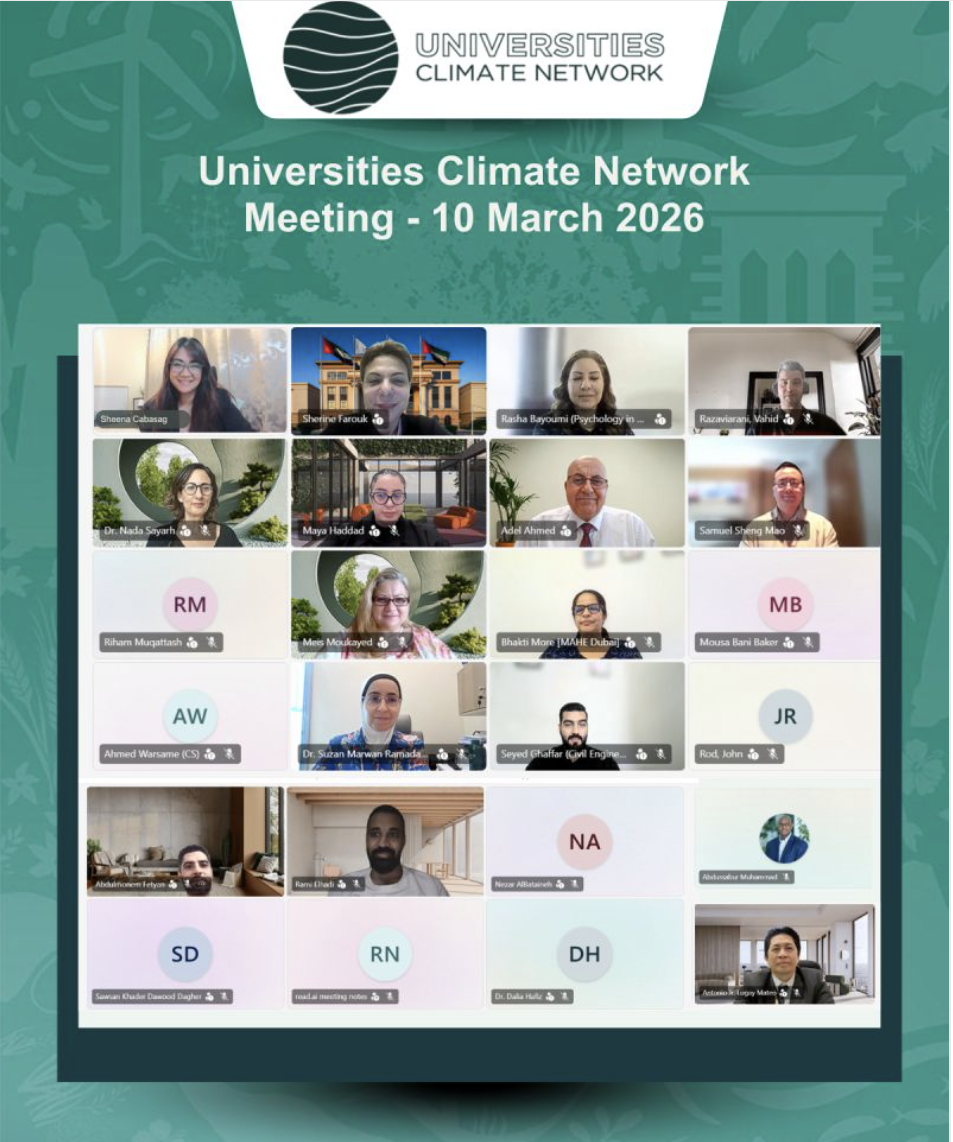 | 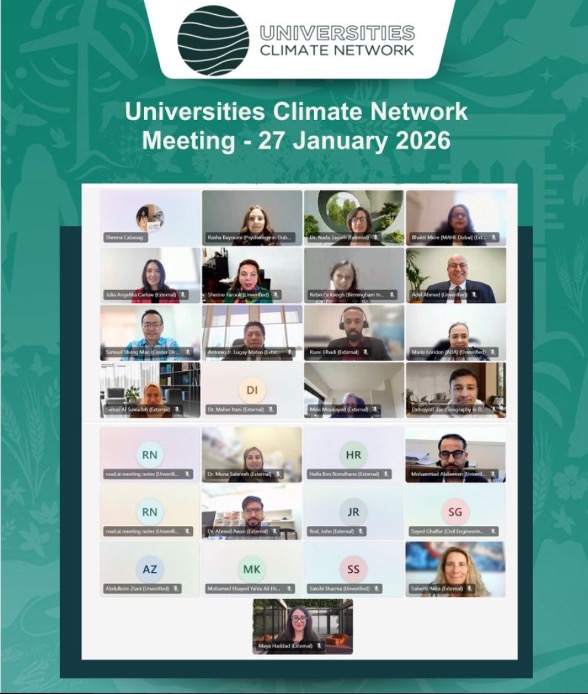 |
Linkedin Page of UCN: Click here
Meeting Links: Click here

01
No Poverty
Sustained economic growth cannot be achieved without social inclusion as the whole of society has a role to play in the development of a country. Federal Law No. 13 of 1972 and its amendments by the law (No.2) in 2001 was issued by the Ministry of Community Development.
Introduction
Sustained economic growth cannot be achieved without social inclusion as the whole of society has a role to play in the development of a country. Federal Law No. 13 of 1972 and its amendments by the law (No.2) in 2001 was issued by the Ministry of Community Development.
(MOCD) as the first law to provide social benefits to members of the community to ensure and sustain the high quality of living for all UAE citizens. The Ministry continues to work today on enhancing social inclusion for all members of society where social benefits are extended to cover twenty-one segments of the community.
The UAE government has a future vision to change the culture of social support from the current ‘social welfare’ model to ‘sustainable social development’ that encourages independence and growth of families across the UAE.
ADU is determined to overcome all challenges that ADU and our students might face as a result of the poverty. We continue to be dedicated to empowering and inspiring outstanding students to pursue their goals. Our scholarships and financial aid programs are available to all students who want to fund their academic programmes. We consider it our duty to provide equal opportunities to students interested in pursuing higher education, enabling them to contribute to society regardless of their financial situation.
In additional to financial aid, ADU scholarships are being provided to outstanding students, through seven main categories, including the Sheikh Hamdan Bin Zayed Scholarship, the President’s Scholarship, the University Scholarship, the Academic Scholarship, the Athletic Scholarship, the Alumni Scholarship, and the Family Tuition Waiver.
We take pride in attracting the brightest students in the UAE and offer them generous support, to excel in their studies. Our Scholarship and Financial Aid programmes are part of ADU’s corporate social responsibility and are influenced by the UAE’s great leadership. ADU is constantly finding pioneering and innovative ways to support and facilitate the needs of our students to help them achieve their academic degree.
Emirates Red Crescent and ADU Launch a Humanitarian Funding Campaign
Emirates Red Crescent and Abu Dhabi University recently launched the Education Support Campaign in coordination with Abu Dhabi Cooperative Society and Lulu Group International. Through this collaboration, ADU and Emirates Red Crescent will support disadvantaged students in their university studies, providing them with an opportunity for a successful educational journey. The campaign aims to raise 10 million dirhams, and students will benefit from these funds starting 24 November 2021 and for one year. (This activity is licensed by the Department of Community Development – Abu Dhabi, permit number 022).
Abu Dhabi Cooperative Society and Lulu Group International will aid the campaign by facilitating donations through their different points of sale. Community members will show their solidarity by donating valuable aid to students, starting at two dirhams.
Public donations will be accepted via text message through Etisalat and Du. Bank donations can be sent to Sharjah Islamic Bank - account number (11445518006), IBAN (AE350410000011445518006). Individuals can also donate through the link provided on the Emirates Red Crescent website (https://www.emiratesrc.ae/eduadu), with the donations ranging from ten dirhams to 1,000 dirhams.
H.E. Salem Al Rayes Al Ameri, Deputy Secretary-General for Local Affairs at Emirates Red Crescent, said, "Sponsoring students is one of the permanent and continuous programs within the initiatives of the Humanitarian and Development Authority. We continue to witness a high rate of response and generosity from sponsors and benefactors. These donations are considered a true embodiment and reflection of the authority's efforts to invest in empowering individuals and guiding them towards achieving their aspirations and fulfilling their dreams."
Al Ameri added, "The Authority acknowledges the important role it plays in preparing future generations for the responsibilities of tomorrow."
Al Ameri praised the existing cooperation between the Emirates Red Crescent and Abu Dhabi University, which seeks to support education and provide opportunities to disadvantaged students whose family circumstances prevent them from continuing their educational path. The cooperation embodies Abu Dhabi University's commitment to fulfilling its social responsibility, as well as its leading academic role in advancing science and education as the most important pillars of human development in the country. He also praised the role of the Abu Dhabi Cooperative Society and Lulu International Group in supporting the activities of the campaign.
Salem Mubarak Al Dhaheri, Executive Director of Community Relations at Abu Dhabi University, said, "Abu Dhabi University is proud of its strategic partnership with Emirates Red Crescent in launching the Education Support Campaign. The campaign aligns with Abu Dhabi University's mission to support students and allows us to share social responsibilities with the community. We are proud of the continuous cooperation and renewed partnership with Emirates Red Crescent in launching campaigns that carry a noble message and achieve a tangible and real impact on our society."
Al Dhaheri added, "Abu Dhabi University appreciates the role of the Abu Dhabi Cooperative Society, Lulu International Group, and all participating partners in supporting the campaign activities. Investing in our young people and building an educated generation capable of leading the continued development of our country is vital."
Abdul Majeed Al Khouri, the Executive Director of the Abu Dhabi Cooperative Society, commented, "Our participation in the Education Support Campaign confirms the depth of the decades-old relationship between the Abu Dhabi Cooperative Society and Emirates Red Crescent. With God's grace, it has gone beyond humanitarian work and now encompasses sustainability. We are proud of this pioneering partnership. The Abu Dhabi Cooperative Society has always sought to serve the community of the UAE and we continuously contribute to helping and supporting various sectors in Abu Dhabi and the other Emirates."
Al Khoori added, "The initiatives adopted by the Abu Dhabi Cooperative Society reflect our passion towards aiding societal struggles related to education. Abu Dhabi Cooperative Society has initiated partnerships with ministries and governmental institutions, such as the Ministry of Social Affairs and the Emirates Red Crescent, to create opportunities for those who dream of pursuing their educational journey. In the last few years, we doubled our efforts and developed initiatives that will allow us to serve our country and consolidate the concept of social responsibility. We are proud to be part of an institution that provides its students with an environment that values charitable work and social development while simultaneously providing high-quality education and academic qualifications that are respected worldwide."
Mr. Aboobakker TP, Director of LuLu Hypermarkets Abu Dhabi and Al Dhafra region, said, "This initiative embodies the belief and commitment of LuLu Group in the bright future of the UAE and the power of the Emirati youth to shape it."
"Education is one of the strongest building blocks for a nation's future, and LuLu Group is honored to share in raising valuable funding for needy students," he continued. "It empowers Emirati youth to contribute to their best potential and lead the future of the country. It is particularly timely that this campaign comes on the eve of the 50th anniversary of the UAE's nationhood. We at LuLu Group International are proud of our identity as a 'homegrown' UAE brand and see this participation in the 'Let's Support Their Future' campaign as our humble contribution to the nation that gave us so much to build upon."
Sustainable Development Goals (SDGs)
Abu Dhabi University is committed to becoming the best institution of its kind in the region. We are a private, multi-campus university committed to meeting the education, skills and knowledge needs in the United Arab Emirates and neighbouring countries through qualifications and standards that are respected across the world.
01
No Poverty

02
Zero Hunger

03
Good Health & Well-Being

04
Quality Education

05
Gender Equality

06
Clean Water & Sanitation

07
Affordable & Clean Energy

08
Decent work & Economic Growth

09
Industry, Innovation & Infrastructure

10
Reduced Inequalities

11
Sustainable Cities & Communites

12
Responsible Consumption & Production

13
Climate Action

14
Life below Water

15
Life on Land

16
Peace, Justice & Strong Institution

17